
Industry Insights
The Negotiation Copilot: AI in Autonomous Procurement
AI procurement systems can compare suppliers, summarize terms, model risk, and draft negotiation moves while keeping final authority with humans.
Read MoreZharfAI Team

The browser is still where a large share of business work happens. AI browser agents matter because they can operate websites that were never designed as APIs.
The common lesson across 2026 AI deployments is that capability alone is not a product. Useful systems combine models with data discipline, clear permissions, evaluation, observability, and a human path for exceptions.
The useful agent does not just click. It observes the page, checks whether the expected state appeared, records evidence, and stops when the page changes in an unsafe way.
Start with a narrow workflow, define the allowed data and actions, and decide which outcomes require approval. Add examples from real edge cases, measure the system after deployment, and keep a visible correction loop for users and reviewers.
Web pages are adversarial and unstable. A modal, dark pattern, login wall, or changed selector can turn a simple task into a risky automation.
At ZharfAI, we see durable AI adoption as a systems problem. The model is one component; the surrounding architecture decides whether the result is useful, trusted, and maintainable.
AI procurement systems can compare suppliers, summarize terms, model risk, and draft negotiation moves while keeping final authority with humans.
Read More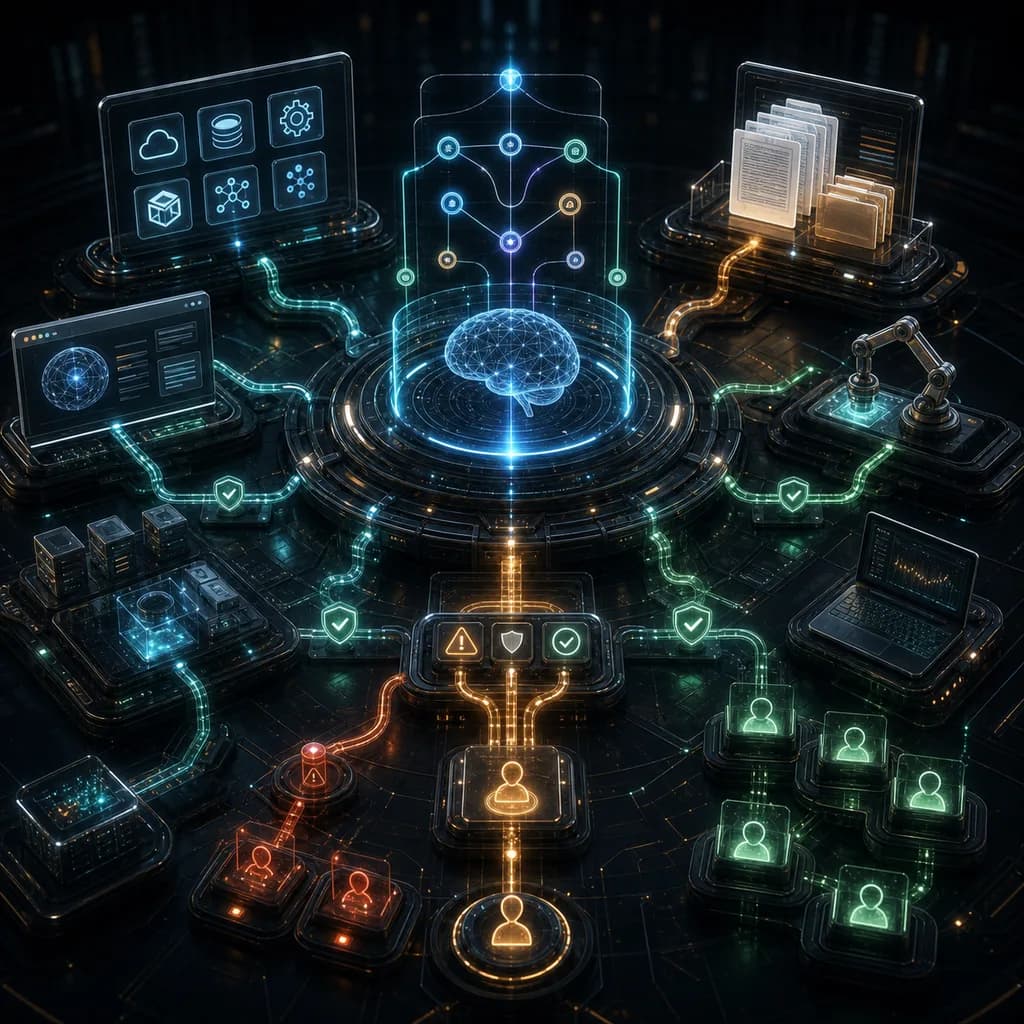
AI is pushing robotic process automation from brittle scripts toward adaptive orchestration across people, APIs, documents, and user interfaces.
Read More
Software agents are moving from autocomplete into repository-level work: reproducing bugs, editing code, running tests, and preparing reviewable pull requests.
Read MoreGet in touch with our team to discuss how we can help your business.