Industry Insights
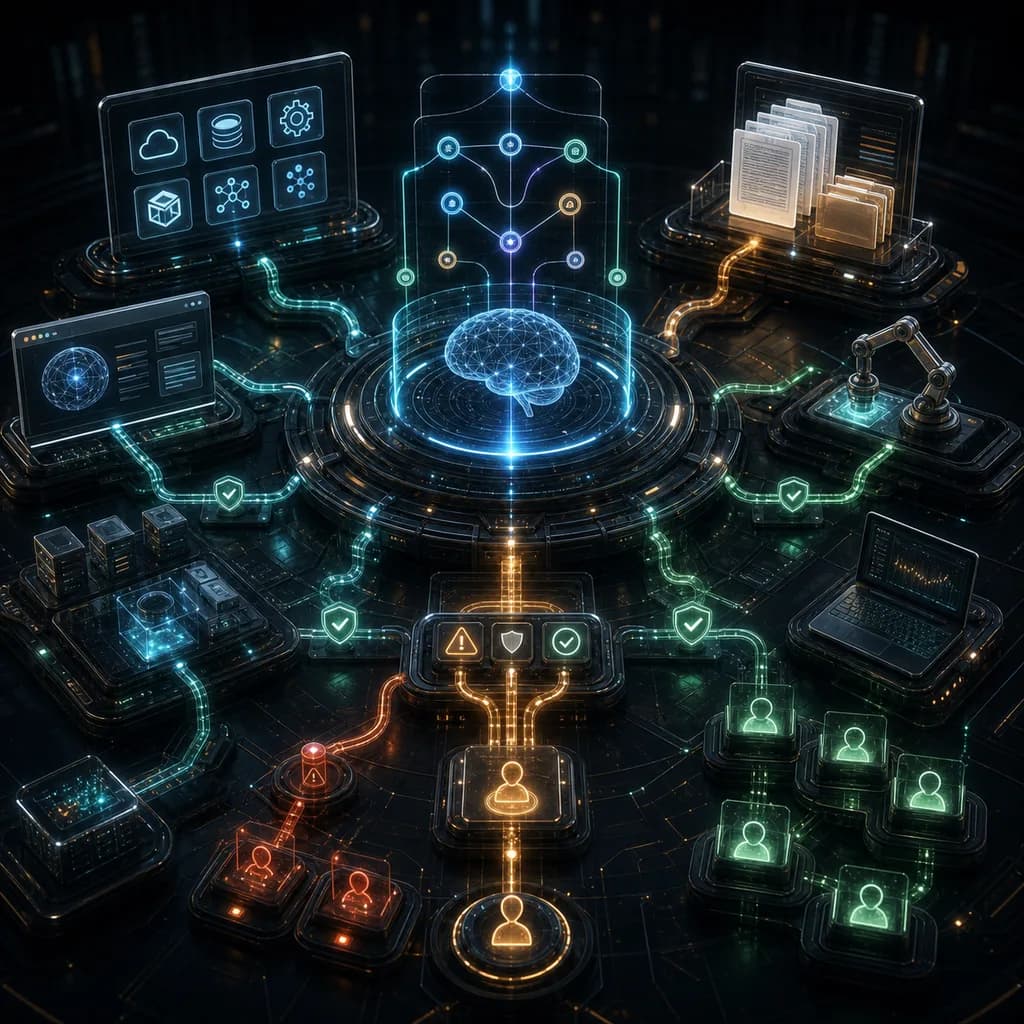
The Orchestration Layer: AI Beyond Traditional RPA
AI is pushing robotic process automation from brittle scripts toward adaptive orchestration across people, APIs, documents, and user interfaces.
Read MoreZharfAI Team

Procurement is full of structured and unstructured tradeoffs: price, delivery, risk, compliance, contract terms, supplier history, and strategic value.
The common lesson across 2026 AI deployments is that capability alone is not a product. Useful systems combine models with data discipline, clear permissions, evaluation, observability, and a human path for exceptions.
AI can prepare negotiation briefs, identify risky clauses, compare offers, suggest counteroffers, and track whether savings create hidden operational risk.
Start with a narrow workflow, define the allowed data and actions, and decide which outcomes require approval. Add examples from real edge cases, measure the system after deployment, and keep a visible correction loop for users and reviewers.
Autonomy should stop before commitments. Pricing, legal terms, and supplier relationships require approval policies that are visible and enforced.
At ZharfAI, we see durable AI adoption as a systems problem. The model is one component; the surrounding architecture decides whether the result is useful, trusted, and maintainable.
AI is pushing robotic process automation from brittle scripts toward adaptive orchestration across people, APIs, documents, and user interfaces.
Read More
Web-browsing agents can research, compare, click, fill forms, and verify pages, but reliability depends on state awareness and constrained actions.
Read More
Warehouse AI coordinates people, robots, inventory, slots, waves, and exceptions so fulfillment systems can adapt in real time.
Read MoreGet in touch with our team to discuss how we can help your business.