
Industry Insights
The Digital Hive: How AI is Transforming Beekeeping and Apiculture
From acoustic monitoring to predicting colony collapse: How artificial intelligence is helping save the world's most important pollinators.
Read MoreZharfAI Team

For 10,000 years, agriculture has been a battle against the elements. The human food supply has been fundamentally at the mercy of unpredictable rainfall, sudden frosts, locust swarms, and degrading topsoil. Today, the global climate crisis has made traditional open-field farming radically unstable, threatening the food security of billions.
In 2026, artificial intelligence is decoupling agriculture from the chaos of the weather. By treating a farm not as a plot of dirt, but as a hyper-controlled digital factory, AI is optimizing every single variable of crop production. Welcome to the era of algorithmic agriculture.
Traditional farming treats a 1,000-acre field as a single organism, indiscriminately spraying an expensive chemical blanket of fertilizer and pesticide everywhere.
By moving agriculture indoors and stacking it upwards in urban skyscrapers, we eliminate the need for arable land and completely remove the threat of bad weather. But managing a vertical farm is computationally immense.
As insect populations dwindle globally and agricultural labor shortages worsen, the physical tasks of farming must be automated.
The human population is accelerating, and the amount of arable land is shrinking. We can no longer rely on the unpredictable grace of nature to feed the world. By applying the absolute control of artificial intelligence to the biological process of growing food, we are ensuring that the fundamental mathematical equation of human survival is solved.
At ZharfAI, we believe that the most vital use of technology is preserving human life. The true miracle of the AI revolution isn't just silicon and software; it's the fact that algorithmic code is finally learning how to grow the perfect tomato.
From acoustic monitoring to predicting colony collapse: How artificial intelligence is helping save the world's most important pollinators.
Read More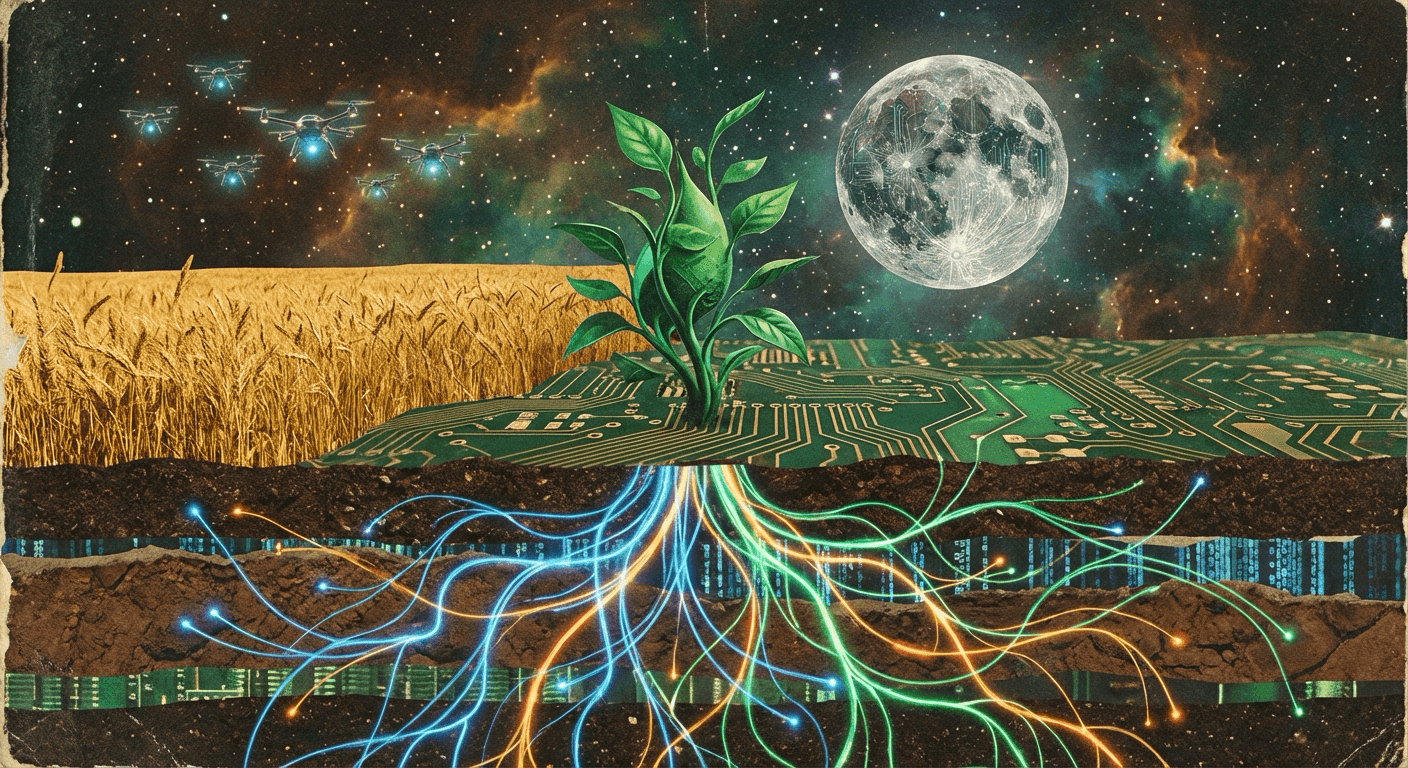
Precision farming, autonomous tractors, and crop monitoring: How AI is feeding the world by doing more with less.
Read More
From robotic sorting lines to material passports: How AI helps companies recover value from waste and design products that can return to use.
Read MoreGet in touch with our team to discuss how we can help your business.