The Digital Dinosaur: AI in Paleontology and Evolutionary Biology
Paleontology has traditionally been a science of painstaking physical labor—carefully brushing dust off fragmented bones in the blazing sun, followed by years in a museum basement trying to piece together a 65-million-year-old jigsaw puzzle with half the pieces missing.
In 2026, the study of ancient life has collided with cutting-edge artificial intelligence. By applying computer vision, 3D modeling, and advanced genomics, scientists are no longer just digging up the past; they are digitally resurrecting it, solving evolutionary mysteries that have baffled researchers for centuries.
1. Algorithmic Bone Reconstruction
Fossilized remains are rarely found intact. They are usually crushed by millions of years of geological pressure, shattered, and scattered.
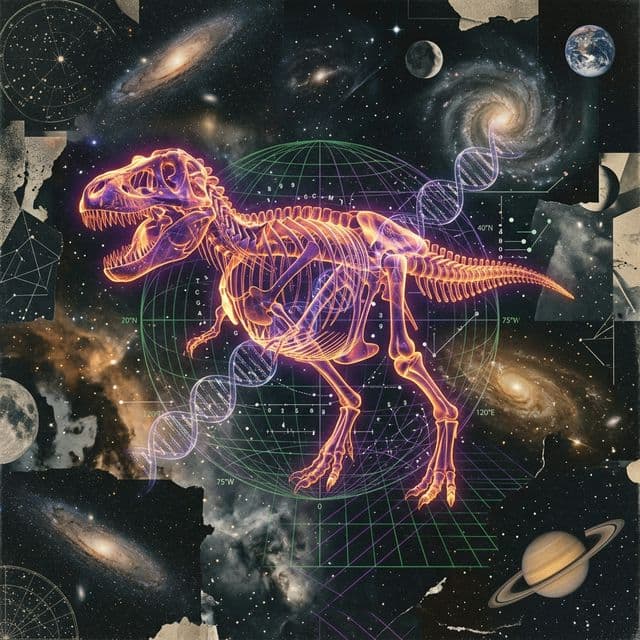
- 3D Puzzle Solving: When paleontologists unearth a fragmented skull belonging to a previously unknown theropod, they run the individual shards through a high-resolution CT scanner. Instead of a human spending five years trying to glue the pieces together, an AI neural network trained on the skeletal morphology of every known vertebrate species takes over. The AI mathematically calculates the structural stress points, curves, and joining edges, instantly snapping the digital 3D fragments together into a mathematically perfect whole, interpolating any missing pieces with over 90% accuracy.
- Biomechanical Simulation: Once the skeleton is rebuilt, the AI is tasked with adding muscle and calculating physics. By analyzing the fossilized attachment points of tendons on the bone, the AI generates a biomechanical simulation of the living animal. Researchers can watch a digitally resurrected T-Rex walk, calculate its exact bite force, and determine its maximum running speed, ending decades of academic debate in an afternoon.
2. Reading the Evolutionary Tree
The history of life on Earth is written in our DNA, but the specific path evolution took is a massive, incredibly complex data problem.
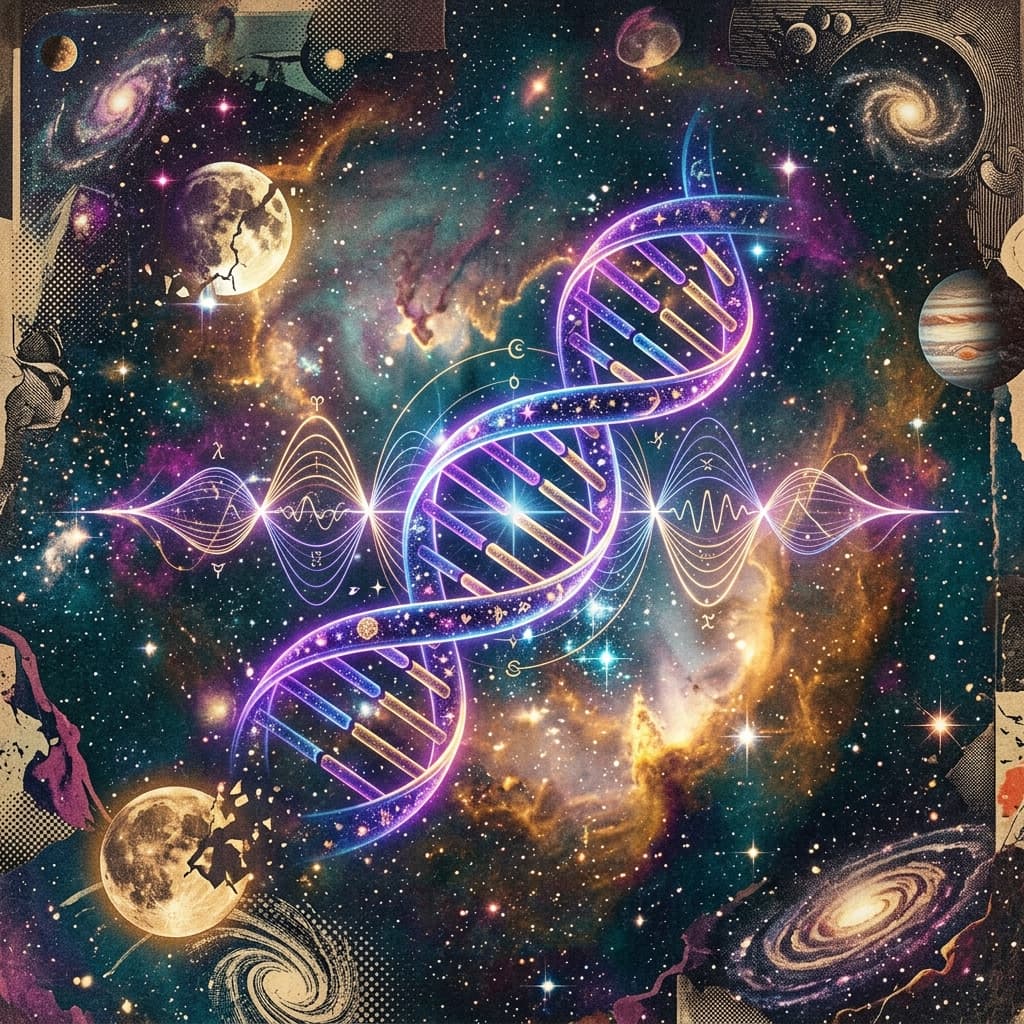
- Genomic Time Travel: Evolutionary biologists use AI to trace the genetic lineage of modern animals backward in time. By comparing the entirely sequenced genomes of an elephant and a manatee (distant relatives), an LLM can calculate the exact rate of genetic mutation backward, accurately predicting the DNA blueprint of their shared, non-fossilized ancestor from 50 million years ago.
- Ancient Protein Sequencing: DNA breaks down entirely after about a million years, meaning we have no DNA from dinosaurs. However, certain structural proteins (like collagen) can survive tens of millions of years longer. AI models like DeepMind's AlphaFold are now being used to analyze these degraded ancient protein fragments scraped from dinosaur bones, reverse-engineering the animal's biochemistry and revealing its true relationship to modern birds.
3. Remote Fossil Detection
Finding fossils used to be a combination of geological knowledge and pure luck.
Today, AI models process thousands of high-definition satellite images. By correlating the exact spectral signature of the soil, the erosion patterns, and the topographic slopes where fossils are statistically most likely to be exposed, the AI generates precise "treasure maps." It highlights a 50-square-yard patch in the Gobi desert, telling paleontologists exactly where to dig to find a new tyrannosaurid.
Unearthing the Future
Studying the past is not merely an exercise in curiosity. Understanding how ancient species adapted to (or perished during) periods of severe climate change is critical data for predicting how modern ecosystems will survive in the coming decades.
At ZharfAI, we recognize that artificial intelligence doesn't just look forward; it has given us a magnifying glass to read the deepest chapters of Earth's history, proving that the most advanced technology is sometimes best used to study the oldest bones.