The Algorithmic Battlefield: How AI is Redefining Modern Defense and Warfare
The history of warfare is marked by massive technological leaps: gunpowder, the invention of the airplane, radar, and nuclear energy. Today, global militaries are undergoing a paradigm shift that dwarfs them all. The new center of gravity in international defense is not the speed of a jet or the range of a missile, but the speed of decision-making.
In 2026, Artificial Intelligence has moved from the realm of science fiction into active military deployment. Modern conflict generates an overwhelming tsunami of data. AI acts as a digital commander, processing this chaos instantly to give militaries an unprecedented strategic advantage.
1. Intelligence, Surveillance, and Reconnaissance (ISR)
Historically, military intelligence relied heavily on human analysts staring at satellite photos for hours, trying to spot enemy troop movements.
- Automated Target Recognition: Today, AI algorithms process live optical, infrared, and radar feeds from low-earth orbit satellites and high-altitude drones simultaneously. In milliseconds, the AI can filter through massive swaths of terrain, automatically identifying, classifying, and tracking the movement of specific enemy assets—distinguishing between a civilian truck and a mobile missile launcher hidden under camouflage netting.
- Predictive Logistics: Wars are won on logistics. AI tracks a nation's own supply chains, analyzing maintenance data from tanks and aircraft to predict when a part will fail before it happens, ordering the replacement part to a forward operating base exactly when it is needed. Predictively disrupting the enemy's logistics—identifying exactly where their fuel resupply routes converge—has become a primary AI objective.
2. Decision Superiority and Command Centers
In a modern combat scenario, a human commander might have 15 minutes to perceive a threat, understand the context, formulate a plan, and execute. AI shrinks that "kill chain" to seconds.
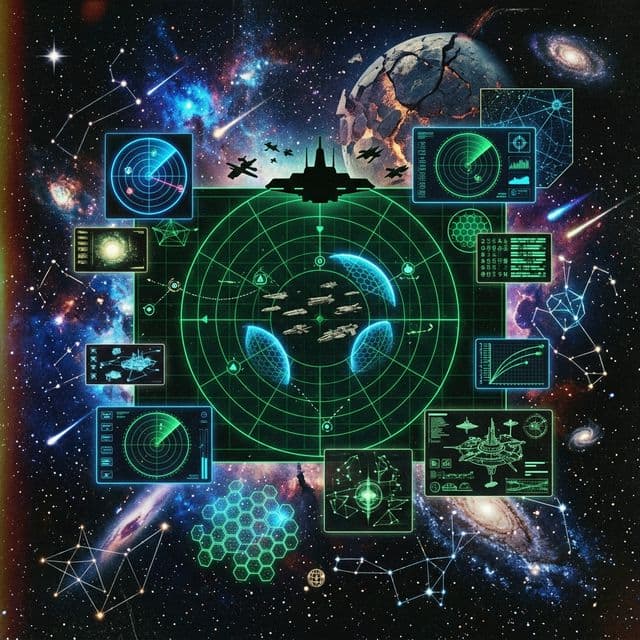
- Battlefield Data Fusion: Command centers now use AI to ingest and synthesize petabytes of raw data: intercepted radio signals, open-source social media posts from citizens on the ground, weather patterns, and live radar. The AI fuses this into a single, cohesive "pane of glass," presenting the commander with a real-time, holographic 3D map of the battlespace.
- Course of Action Generation: Instead of just showing the commander what is happening, AI instantly runs millions of war-gaming simulations to propose three different courses of action, outlining the exact probability of success, the required resource expenditures, and the predicted collateral damage of each option.
3. The Ethics of Lethal Autonomous Weapons Systems (LAWS)
The integration of AI into defense is incredibly controversial. While current international norms dictate that a human must always pull the trigger—"human in the loop"—the speed of modern hypersonic missiles and drone attacks is forcing militaries to increasingly automated defense systems (like ship-based anti-missile cannons) that react faster than human cognition allows.
The global debate now centers on "trusting the algorithm." When an AI identifies a target and recommends a strike, human operators often suffer from "automation bias," trusting the machine's judgment over their own intuition. Ensuring AI systems are transparent, auditable, and adhere to the Laws of Armed Conflict is the most pressing legal challenge of our era.
The Future of Global Security
AI in defense isn't just about building smarter weapons; it's about deterrence. Nations with superior AI capabilities hold a strategic advantage so profound it acts as a deterrent to conventional war.
At ZharfAI, we believe that understanding the intersection of technology and global security is vital. By studying the algorithmic battlefield, we prepare for a future where wars are won not just by those with the most iron, but by those with the clearest data.