
technology
Robostral Navigate: An 8B Model That Navigates with One Camera
Mistral's July 8 embodied model reaches 76.6% success on unseen R2R-CE routes using one RGB camera, with a compact architecture and simulation-only training.
Read MoreZharfAI Research
Model release desk
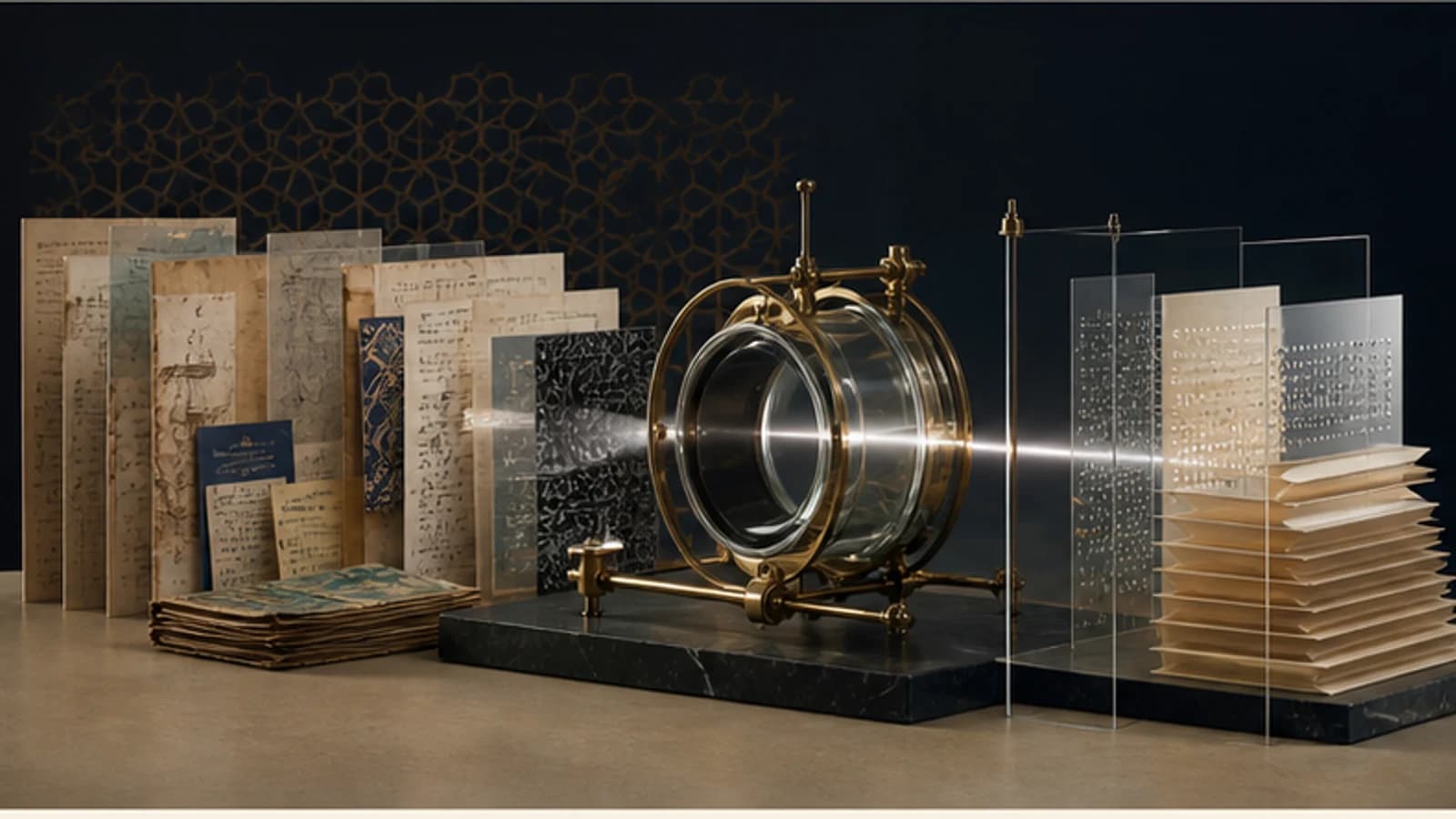
Mistral AI released OCR 4 on June 23, 2026 as a focused document-understanding model rather than a general chatbot. The official launch reports 85.20 on OlmOCRBench, 93.07 on OmniDocBench, and a 72 percent average win rate in blind human preferences. It supports 170 languages, returns bounding boxes, block classifications, and inline confidence, and can run in a single self-hosted container for enterprise customers.
The official OCR documentation defines the accepted document and image inputs and the structured response contract. That contract is operationally as important as the benchmark: it determines whether page evidence can survive downstream extraction, retrieval, and review.
OCR 4 belongs in a broad model-release series because documents are a foundation modality for search, RAG, and agents. A general frontier model may understand a page, but production ingestion needs repeatable layout, coordinates, confidence, and throughput. Mistral also publishes a rare warning: common OCR benchmarks contain ground-truth and scoring artifacts, so aggregate scores are directional.
Earlier OCR systems often returned Markdown or plain text. OCR 4 adds the location and type of each block: title, table, equation, signature, and other structures. It attaches page- and word-level confidence. Downstream systems can highlight a cited region, route low-confidence spans to review, and preserve reading order.
The model accepts PDF, DOC, PPT, and OpenDocument formats. Its 170-language coverage spans ten groups, including Middle Eastern and specialized low-resource languages. Self-hosting supports residency and private archives; API and Document AI provide managed paths.
This structure is more important than a small score gain for many deployments. An agent needs to know not only what text says, but where it came from and how certain extraction was.
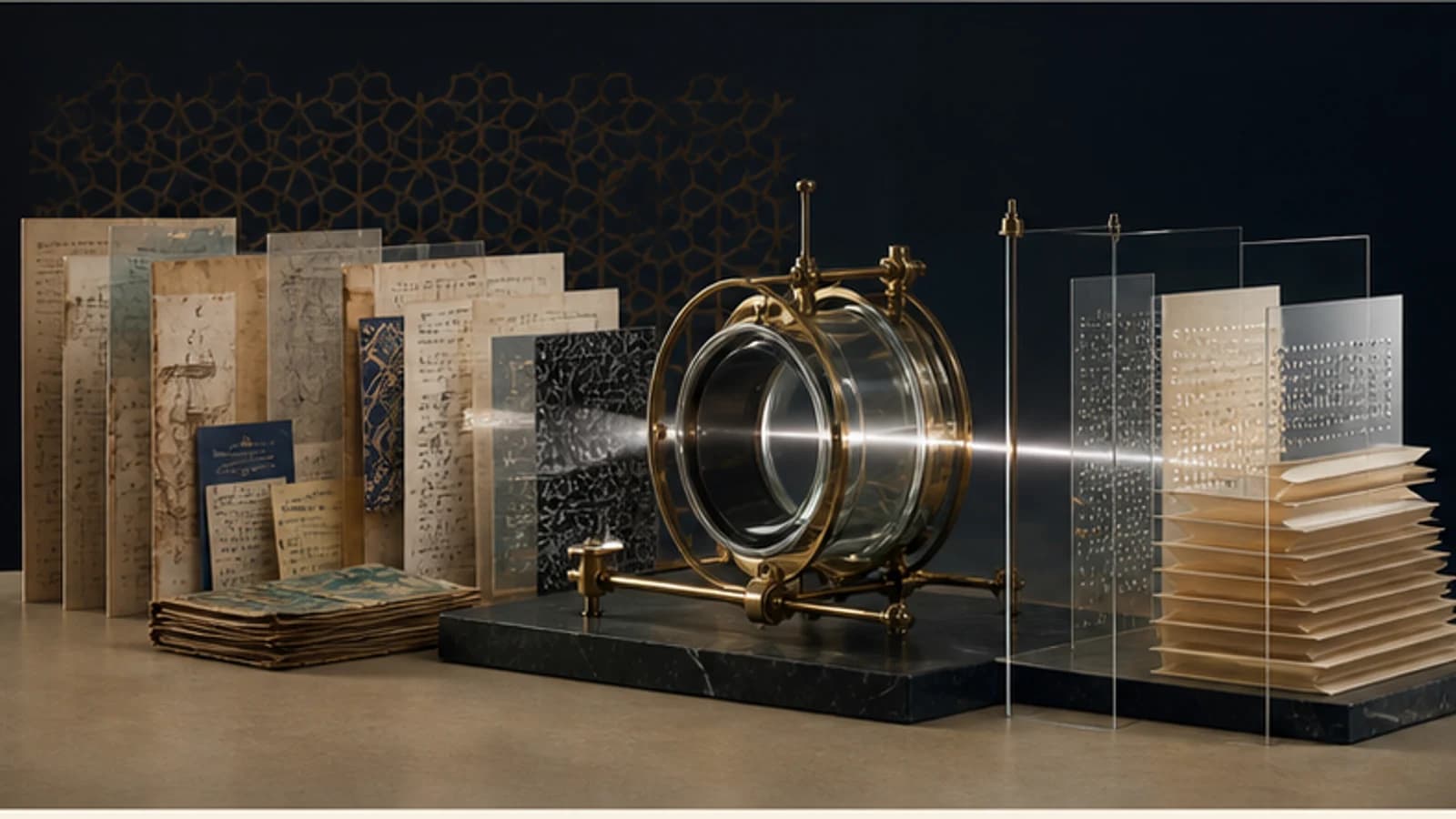
Mistral provides three complementary views:
| Evaluation | OCR 4 result | What it contributes | Caveat |
|---|---|---|---|
| OlmOCRBench | 85.20 | Public document parsing aggregate | Reference and formatting artifacts exist |
| OmniDocBench | 93.07 | Broad document-structure score | Equivalent output can be penalized |
| Crawl Multilingual | 0.98 | Internal multilingual evaluation | First-party dataset, not independently reproducible |
| Human preference | 72% average win rate | Blind comparison on 600+ documents and 12+ languages | Preference depends on sampled document mix |
| Coverage | 170 languages | Breadth of supported input | Support does not imply equal accuracy |
Mistral explains several failure modes in automated scoring: incorrect reference text, equivalent LaTeX, different equation segmentation, multi-column ordering, and block attribution. A model can read a source correctly yet lose points against a flawed reference. The reverse can also occur.
The human study uses more than 600 documents, over twelve languages, and independent annotators who compare outputs blindly. Preference can capture legibility and structural usefulness that string metrics miss.
Human judgment also has limits. Annotators may prefer clean formatting while overlooking a changed amount or missing footnote. For financial, legal, or medical documents, field accuracy and omission severity matter more than visual neatness. A local evaluation should combine exact fields, reading order, layout, and reviewer preference.
Use authorized documents from the real distribution: scans, photos, rotated pages, handwriting, multi-column reports, tables, signatures, and Persian forms. Oversampling easy digital PDFs will exaggerate readiness.
Coordinates let a search or RAG system link an answer back to a page region. That supports citations, redaction, and human review. Confidence can trigger a fallback or manual queue. Block types improve semantic chunking by keeping a table or equation together.
Confidence must be calibrated. A high number is not proof of correctness. Plot error rate by confidence band on local data and choose thresholds based on risk. A low-confidence total on an invoice may require review; a low-confidence decorative footer may not.
Bounding boxes also contain sensitive layout information. Redaction workflows must apply to images and extracted text, and logs should not retain documents unnecessarily.
Mistral says OCR 4 leads its internal evaluation across language groups and has its largest advantages on specialized and low-resource languages. Persian deployments should test joined letters, half-spaces, Arabic-versus-Persian forms, Persian digits, dates, stamps, mixed English identifiers, and right-to-left table order.
One page may contain Persian body text, English product codes, Latin formulas, and an Arabic quotation. Character accuracy alone does not verify reading order or field association. The model should preserve exact identifiers even when surrounding prose is localized.
Build a per-language error report instead of one global average. A 170-language claim is an access promise, not an assurance that every language clears the same threshold.
The OCR 4 API is priced at $4 per 1,000 pages, with a 50 percent batch discount. Document AI adds application features at $5 per 1,000 pages. Enterprise customers can self-host a single-container deployment.
These paths have different economics and governance. The API suits pipelines that want raw structured output. Document AI suits teams that want a managed application. Self-hosting suits residency and volume but adds capacity, upgrades, and monitoring.
Measure pages per second, tail latency, file limits, retry behavior, and accepted cost. A vendor customer reports equivalent accuracy at roughly eight times lower cost and seventeen times lower latency on one financial QA workload; that is a testimonial, not a general benchmark.
Mistral explicitly says OCR 4 is an extraction model, not a medical, legal, financial, or safety-critical decision-maker. Structured output should feed a reviewed process. A confidence score cannot authorize payment or determine eligibility.
For RAG, test retrieval separately from extraction. For forms, reconcile fields with source boxes. For agent action, require deterministic validation and approval. Our multimodal document intelligence guide describes the evidence chain from page to decision.
Build acceptance by document class rather than one aggregate OCR score. Create hidden sets for Persian and English contracts, invoices, receipts, tables, handwriting, rotated scans, low-resolution mobile photos, stamps, charts, and mixed-direction pages. Measure character and word error, reading order, table structure, field accuracy, bounding-box overlap, confidence calibration, and the rate at which a reviewer can locate the source of every extracted value.
The same suite should compare API and self-hosted output at a pinned model revision. Record preprocessing, resolution, page splitting, timeout, and container version. A deployment passes only when evidence fidelity and downstream task quality hold under its actual privacy and latency constraints. The frontier model evaluation guide provides a reusable structure for those workload-specific thresholds.
Prompt injection can exist inside a document. Treat extracted instructions as content, not system commands. Tool-using agents should never inherit authority from a scanned page.
Mistral OCR 4 is a major specialized model because it combines high public scores, structured evidence, multilingual breadth, and a private deployment path. Its launch is strengthened—not weakened—by acknowledging benchmark defects.
The correct adoption test uses local documents and field-level severity, calibrates confidence, measures page economics, and validates RTL order. OCR 4 can become a strong ingestion layer for search and agents, but every high-stakes action must remain downstream of source reconciliation and human authority.
Mistral's July 8 embodied model reaches 76.6% success on unseen R2R-CE routes using one RGB camera, with a compact architecture and simulation-only training.
Read More
Cohere's May 20 Apache-2.0 release unifies reasoning, vision, tools, retrieval, and 48 languages in a 218B MoE with only 25B active parameters.
Read More
A practical architecture for evaluating cyber-capable AI agents without giving a benchmark sandbox a transitive path into production systems.
Read MoreGet in touch with our team to discuss how we can help your business.