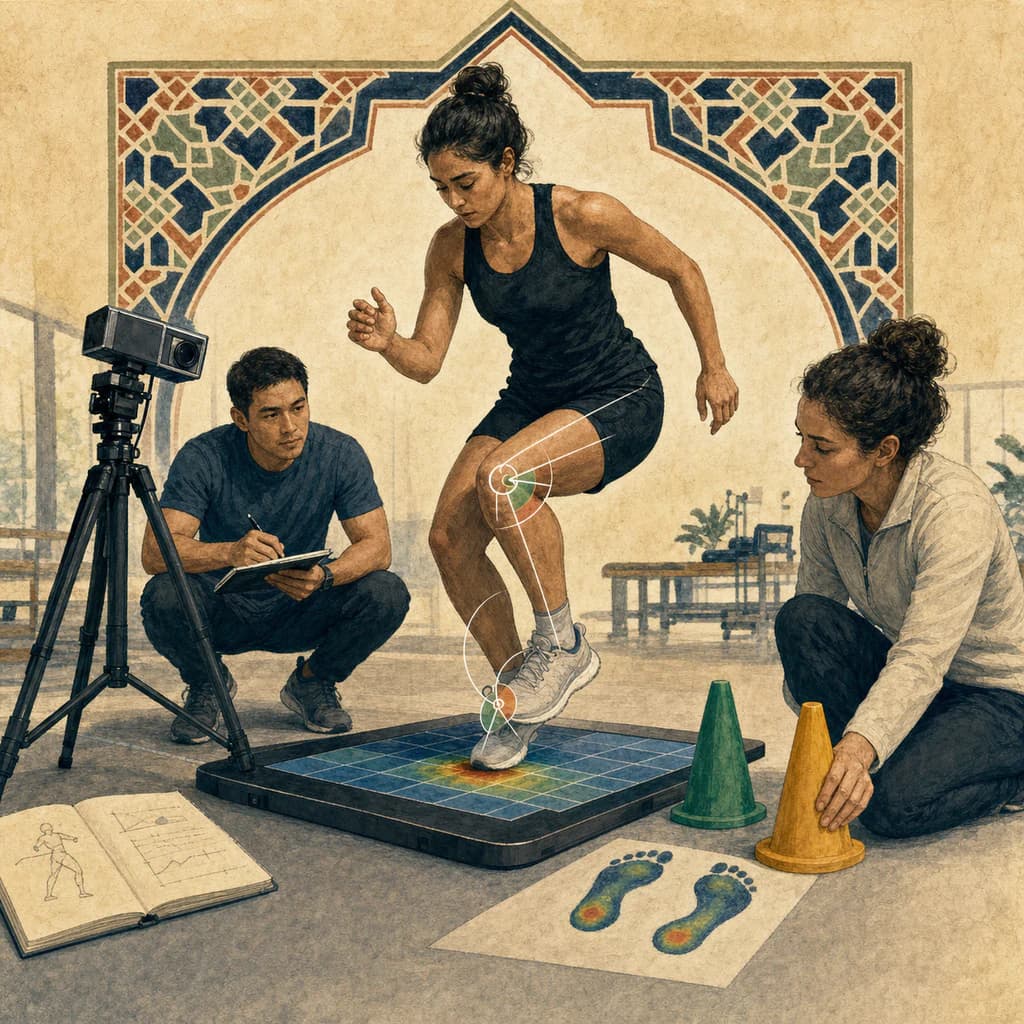
Athlete monitoring can measure training exposure, movement, heart rate, sleep estimates, symptoms, and self-reported wellbeing. AI can summarize patterns and flag an unusual change. It cannot diagnose an injury, guarantee prevention, determine medical clearance, or reduce a person to a hidden “readiness” score used for selection or contract decisions.
Performance staff, coaches, clinicians, and athletes need different data and authority. A system should improve a conversation and an evidence trail, not create compulsory biometric surveillance.
Define the purpose, athlete group, and authority
Write a use-case charter:
- performance question and expected decision;
- sport, position, level, age, sex or gender context where relevant, disability or para-sport context, and competition phase;
- data collected on and off the field;
- athlete, coach, sport-science, medical, and management access;
- whether the output is training advice, research, wellness support, or clinical decision support;
- who may change training, restrict participation, diagnose, treat, or clear return;
- prohibited uses such as contract, salary, selection, discipline, or public disclosure without a separate lawful and fair process.
Do not begin with “predict injury.” Define the target: a measured load change, reported health problem, time-loss injury, medical-attention injury, or performance deviation. These labels are different and can produce different models.
The FDA’s January 2026 General Wellness: Policy for Low Risk Devices distinguishes certain healthy-lifestyle software functions unrelated to diagnosis, cure, mitigation, prevention, or treatment of disease or a condition. It is nonbinding U.S. guidance and not a blanket exemption for every sports wearable or claim. Intended use and jurisdiction matter.
Build a consented athlete data map
Map every data stream:
- GPS, accelerometer, gyroscope, force, power, video, or timing;
- heart rate, heart-rate variability, temperature, sleep estimate, or other physiology;
- session duration, intensity, drills, travel, competition, and environment;
- rating of perceived exertion, soreness, fatigue, mood, symptoms, and menstrual-cycle information where voluntarily and appropriately collected;
- injury, illness, treatment, rehabilitation, and availability;
- nutrition, laboratory, genomic, microbiome, or other biological data;
- device, firmware, algorithm, calibration, and placement.
For each, record purpose, legal basis, consent or other authority, collection context, access, retention, sharing, correction, withdrawal, and deletion. Consent in a power-imbalanced team environment may not always be freely given; involve athlete representation, privacy, legal, ethics, and medical governance.
Use the least intrusive data that answers the question. A training-load workflow rarely needs continuous location away from training, private messages, reproductive-health details, or a complete medical record.
Preserve measurement and exposure lineage
Device output is not ground truth by default. Record athlete, session, device, firmware, body placement, sampling rate, calibration, start and stop, missing interval, environmental condition, and transformation.
Connect external load—distance, speed, acceleration, force, repetitions, impacts, minutes—to internal response such as heart rate or perceived exertion. Keep subjective reports as valuable observations, not inferior data to be “corrected” by a wearable.
The IOC consensus statement on load and risk of illness describes external and internal load and notes that evidence for many markers is limited; no single marker consistently predicts acute illness or overtraining syndrome. The statement is consensus guidance, not a diagnostic algorithm.
Reconcile exposure with schedule, substitution, incomplete sessions, position, and competition. Missing wearable data should not be interpreted as recovery or nonparticipation.
Separate surveillance definitions from model labels
The IOC 2020 consensus statement on recording and reporting injury and illness recommends consistent definitions for health problems, exposure, severity, burden, and study population. It also says devices should be fit for purpose with evidence of validity and reliability before their data support surveillance.
Create a label specification:
- case definition and clinical owner;
- onset and report date;
- acute, repetitive, overuse, recurrent, or unrelated event;
- medical attention, time loss, severity, and burden;
- exposure denominator;
- censoring, transfer, retirement, and missing follow-up;
- privacy and adjudication.
Do not label every soreness report as injury or use time loss alone to define health. Team selection and medical reporting can bias labels. The model should not learn that an athlete who hides symptoms is healthier.
Evaluate monitoring models prospectively
Random train-test splits across sessions can leak the same athlete, season, and injury episode. Split by athlete, time, team, and event as appropriate. Keep future medical and rehabilitation data out of features available at prediction time.
Measure:
- sensitivity, specificity, predictive values, and calibration;
- false alerts per athlete-week;
- lead time and stability;
- missing-data and device-failure behavior;
- performance by sport, position, age, sex or gender where justified, disability context, device, team, and phase;
- external validation on a different squad or season;
- decision-curve or utility under actual response capacity.
Rare injuries can make accuracy misleading. A model that predicts “no injury” every day may appear highly accurate. Report absolute counts and uncertainty.
Prospective shadow use is essential. Record what staff would have done, what they did, and what happened. A risk association does not establish that changing training because of the alert prevents injury.
Keep medical diagnosis and clearance with clinicians
An athlete reporting chest pain, neurological symptoms, severe shortness of breath, acute trauma, or other red flags needs the established medical and emergency pathway—not a readiness dashboard.
Model outputs should use non-diagnostic language such as “change from personal baseline requiring review.” The clinician determines history, examination, testing, diagnosis, treatment, rehabilitation, and return-to-sport. Coaches receive only the information necessary for safe participation, not unrestricted clinical details.
Do not let performance staff override medical restriction or let a low-risk model score clear an athlete. Keep the medical record separate from coaching analytics with role-based access and an auditable release of availability status.
AI in fitness and biomechanics can support technique and workload feedback. Movement differences are not automatically pathology, and an “optimal” technique varies by task, body, disability, skill, and goal.
Design training recommendations as reversible proposals
A useful recommendation should show:
- observed change and data quality;
- comparison with the athlete’s own baseline and relevant group context;
- uncertainty and alternative explanations;
- proposed adjustment, duration, and expected effect;
- competing performance and recovery goals;
- medical or coaching review required;
- reassessment trigger and rollback.
Use hard schedule and safety constraints. Do not increase load solely because an athlete’s score is green or remove them solely because it is red. Combine athlete feedback, coaching observation, medical status, calendar, and performance objectives.
Record overrides without punishing them. The athlete or practitioner may know about travel, life stress, device error, or symptoms absent from the model.
Treat biology and nutrition claims cautiously
Microbiome, genomic, metabolomic, hormonal, and laboratory data can be sensitive, variable, and context dependent. Analytical validity, specimen handling, timing, diet, medication, illness, and batch effects matter before interpretation.
Do not infer a personalized supplement or “optimal diet” from a single consumer test. Nutrition advice should be provided by appropriately qualified professionals and consider energy availability, allergens, preferences, culture, anti-doping risk, and clinical needs.
Separate exploratory research from operational care. Store specimen consent, assay, laboratory, reference, processing pipeline, interpretation version, and uncertainty. Secondary research, commercialization, or sharing requires explicit governance.
Any supplement or intervention also needs anti-doping review under the rules applicable to the athlete. A model’s ingredient summary cannot guarantee a product is permitted, uncontaminated, or accurately labeled.
Protect athlete privacy and bargaining power
Biometric and health data can affect reputation, playing time, contracts, insurance, or selection. Apply strict purpose limitation, role-based access, encryption, short retention where possible, export logging, and contractual controls over vendors.
The WADA International Standard for the Protection of Privacy and Personal Information sets privacy rules for anti-doping organizations processing data under the World Anti-Doping Code. Its scope is anti-doping, not general team performance monitoring; it illustrates why purpose, relevance, proportionality, records, security, and applicable law matter.
Use on-device AI and privacy when raw signals can remain with the athlete and only a bounded output is shared. On-device processing does not resolve coercion, unfair use, or poor inference.
Athletes need access to their data, understandable explanations, correction, complaint, and exit or post-contract treatment. Do not keep a lifelong biometric dossier because storage is cheap.
Prevent unfair surveillance and discriminatory decisions
Do not score effort, character, pain tolerance, honesty, future value, or “coachability” from biometric data. A low sleep estimate or elevated heart rate has many explanations. Mental-health, menstrual, genetic, and disability-related data require especially careful boundaries.
Selection and employment decisions need a separate fairness and legal review. Evaluate whether monitoring disadvantages athletes with different bodies, assistive devices, roles, religious practices, caregiving, travel, or access to recovery resources.
Provide a non-retaliatory route to decline optional collection and challenge incorrect output. Separate wellness support from disciplinary and commercial systems. Team dashboards should show only what each role needs.
Secure devices, vendors, and integrations
Inventory wearables, apps, APIs, vendors, firmware, algorithms, cloud locations, subprocessors, research partners, and exports. Verify device identity and time; protect pairing, accounts, keys, and update channels.
Vendor model updates can change historical comparability. Require release notes, validation evidence, incident notice, data deletion, portability, and exit support. Preserve raw or standardized data where lawful so the team is not locked into a proprietary readiness score.
Validate incoming files and restrict agent tools. A malicious upload or prompt injection should not expose medical data, message a coach, or change a training plan.
Maintain an offline training and medical path. Monitoring outage must not prevent care or safe coaching.
Measure athlete benefit and system burden separately
System KPIs include:
- device wear and valid-data rate;
- synchronization and missing intervals;
- model calibration and false alerts;
- time to review;
- recommendation acceptance, override, and rollback;
- privacy requests and incidents;
- athlete-reported usability and trust;
- staff workload and alert fatigue.
Sport outcomes include availability, training completion, performance measures, health-problem prevalence, incidence, severity, burden, recurrence, and rehabilitation milestones. Use athlete exposure denominators and consistent definitions.
Do not claim injury prevention from a before-after dashboard alone. Schedule, roster, medical staffing, reporting, competition, and random variation can change outcomes. Use controlled or well-designed prospective evaluation where feasible and report uncertainty.
The ultimate KPI is not compliance with wearing a device. It is whether athletes receive useful support without avoidable harm, coercion, or loss of medical confidentiality.
Govern and roll out with athlete representation
Create a governance group including athletes, coaches, sport science, medicine, physiotherapy, nutrition, safeguarding, privacy, security, legal, data, and procurement. For minors, para-athletes, employees, students, and national-team contexts, add the relevant protections and representation.
Maintain an inventory of use cases, data, devices, models, claims, access, retention, decisions, evaluations, and incidents. Revalidate after device, placement, algorithm, population, sport rule, training method, medical definition, or vendor change.
Roll out in phases:
- define one athlete-valued question;
- validate device measurement and data lineage;
- establish consent, access, and prohibited use;
- evaluate the model retrospectively without leakage;
- run prospective shadow monitoring;
- pilot advisory recommendations with clinician and coach review;
- assess benefit, fairness, workload, and privacy;
- expand only with athlete representation and an exit path.
The best sports AI does not claim to update human biology. It gives athletes and qualified staff better evidence while keeping health diagnosis, medical clearance, training authority, and personal autonomy where they belong.
Source notes
Substantive review completed 2026-07-30. FDA’s January 2026 general-wellness guidance is identified as nonbinding U.S. guidance whose scope depends on intended use. IOC consensus sources provide surveillance and load-management guidance and do not establish a universal injury-prediction algorithm. WADA’s privacy standard is scoped to anti-doping data processing, not all team monitoring. Athlete monitoring is separated from diagnosis, clearance, and unfair employment or selection surveillance.