The Digital Ocean: How AI is Deepening Marine Biology
We know more about the surface of the Moon than we do about the bottom of our own oceans. Over 80% of the world's oceans remain unmapped, unobserved, and unexplored. Historically, marine biology was constrained by the hostile reality of deep water: crushing pressure, absolute darkness, and immense, trackless volume.
In 2026, Artificial Intelligence is lifting the veil on the deep sea. By pairing autonomous submersibles with advanced machine learning, marine biologists are analyzing the ocean floor at unprecedented scales, discovering new species, and even learning to translate the language of marine mammals.
1. Autonomous Abyssal Exploration
Deploying manned submersibles or tethered ROVs (Remotely Operated Vehicles) is incredibly expensive and slow.
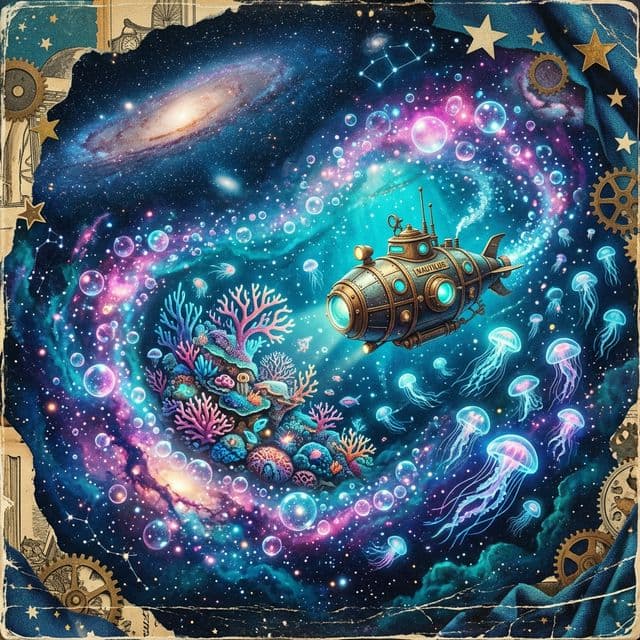
- Swarm AUVs: Researchers now deploy swarms of inexpensive, autonomous underwater vehicles (AUVs) equipped with computer vision AI. These swarms coordinate with each other to grid-search massive areas of the abyssal plain. They autonomously navigate around hydrothermal vents and underwater cliffs without human intervention, continuously recording 8K video.
- Real-Time Species Identification: Streaming video from the ocean floor is notoriously murky ("marine snow"). AI algorithms instantly enhance the video feeds, removing the visual static. When an AUV's camera spots an obscure jellyfish or a bizarre benthic crab, edge-AI models cross-reference the organism against every known marine species database. If the AI determines an 85% probability that the organism is an undocumented species, it autonomously commands the AUV to follow it and capture 3D anatomical scans.
2. Decoding Cetacean Communication
Sperm whales possess the largest brains on Earth and communicate using a complex system of clicks called "codas."
- The Project CETI Breakthrough: Applying the same Large Language Model (LLM) architecture used to train ChatGPT to massive datasets of underwater bioacoustics, scientists are making profound breakthroughs in non-human linguistics. AI has identified grammatical structures, conversational turn-taking, and distinct "dialects" in sperm whale pods.
- Predictive Translation: While we aren't yet having philosophical debates with cetaceans, AI models can now accurately predict the behavioral context of specific whale codas (e.g., distinguishing a hunting coordination call from a calf-rearing signal), marking the first time humanity has systematically decoded the communication of an alien intelligence.
3. Coral Reef Resilience and Restoration
Coral reefs are the rainforests of the sea, but climate change and ocean acidification are triggering massive bleaching events.
- Acoustic Health Monitoring: A healthy coral reef is incredibly loud—like a crowded underwater city. A dead, bleached reef is silent. AI analyzes continuous audio recordings from hydrophones placed on reefs globally, identifying the specific "acoustic signatures" of snapping shrimp and grazing fish. This allows conservationists to monitor the exact real-time biodiversity and health of a reef without sending human divers.
- Super-Coral Selection: AI analyzes the genome of individual coral polyps that successfully survived recent heatwaves. By identifying the specific genetic sequences responsible for thermal resilience, AI guides marine biologists in breeding "super-corals" that are then autonomously planted by underwater drones to restore dying reefs.
4. Combating Illegal Fishing and Bycatch
- Algorithmic Patrols: Illegal, Unreported, and Unregulated (IUU) fishing decimates marine populations. AI analyzes global satellite data (including synthetic aperture radar that sees through clouds) to track vessels that turn off their location transponders, identifying the distinct behavioral patterns of illegal transshipment at sea and alerting local coast guards.
- Smart Nets: Fishing trawlers are deploying "smart nets" equipped with AI cameras. As the net sweeps the water, the AI identifies the species of fish entering the funnel. If it detects a protected species (like a sea turtle or a dolphin), the AI automatically opens an escape hatch in the net, drastically reducing fatal bycatch.
The Future of the Blue Planet
The ocean is the engine of Earth's climate and the cradle of all life. By giving us the tools to observe, understand, and protect the complex web of marine ecosystems, AI is not just advancing science; it is ensuring the survival of the planet's most critical biome.
At ZharfAI, we help research institutions and environmental agencies deploy intelligent, autonomous systems—because the deepest secrets of our world are finally coming to light.