
Industry Insights
The Defect Lens: AI in Manufacturing Quality Vision
Computer vision systems are helping factories detect defects, explain process drift, and close the loop between inspection and production control.
Read MoreZharfAI Team
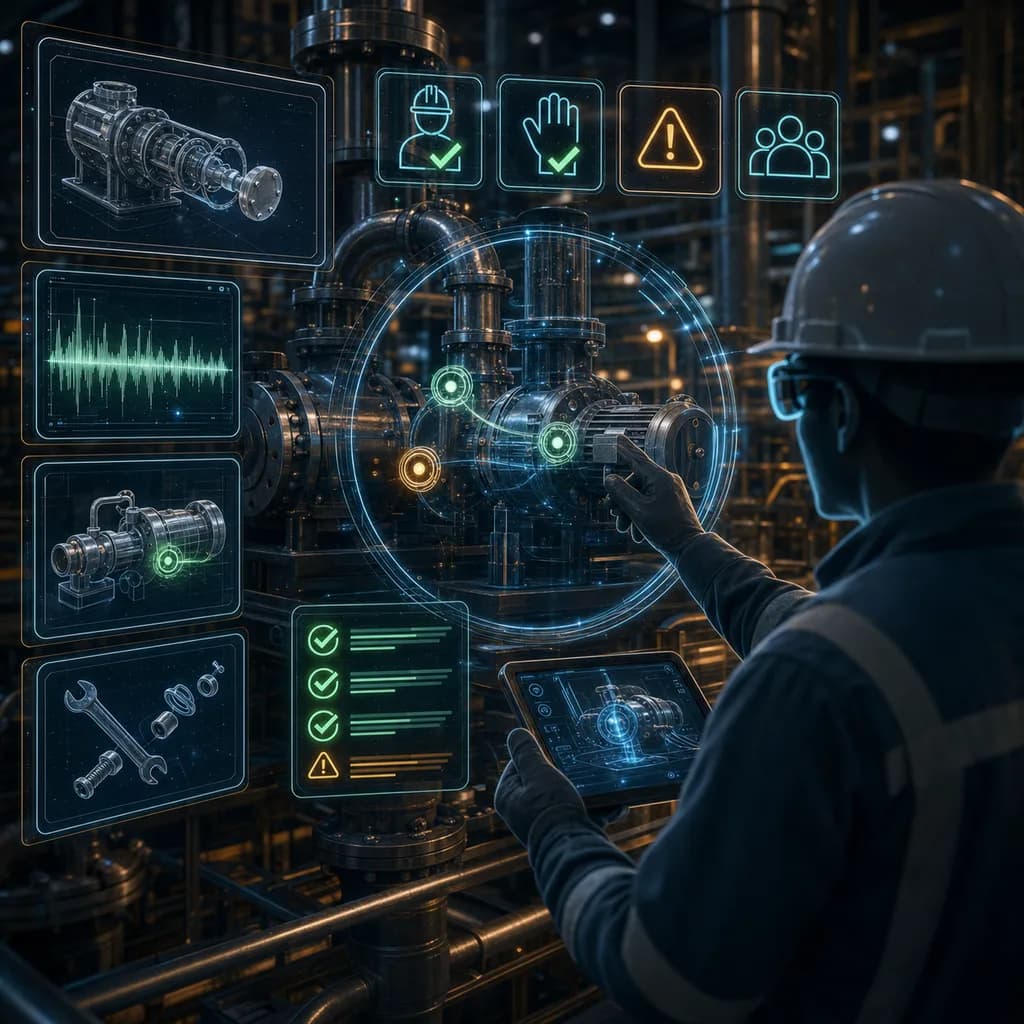
Industrial work happens around physical constraints: noise, gloves, safety rules, machinery, weather, and time pressure. AI must fit that reality rather than behave like an office chatbot.
The common lesson across 2026 AI deployments is that capability alone is not a product. Useful systems combine models with data discipline, clear permissions, evaluation, observability, and a human path for exceptions.
Frontline copilots combine voice, images, equipment manuals, sensor data, checklists, and escalation paths into a field-ready assistant.
Start with a narrow workflow, define the allowed data and actions, and decide which outcomes require approval. Add examples from real edge cases, measure the system after deployment, and keep a visible correction loop for users and reviewers.
The copilot must never pressure a worker to skip safety. High-risk instructions need conservative defaults and human escalation.
At ZharfAI, we see durable AI adoption as a systems problem. The model is one component; the surrounding architecture decides whether the result is useful, trusted, and maintainable.
Computer vision systems are helping factories detect defects, explain process drift, and close the loop between inspection and production control.
Read More
AI helps field teams predict failures, schedule technicians, prepare parts, and capture repair knowledge from every visit.
Read More
From exploration to extraction: How AI makes resource industries safer, more efficient, and sustainable.
Read MoreGet in touch with our team to discuss how we can help your business.